From sweet and savory foods to live performances — the student union had it all the night of Oct. 8. From 4 p.m to 9 p.m., the union bustled with excitement as students explored different foods and performances prepared by AAPI student clubs.
This was the 12th annual market held by the Asian Pacific Student Alliance. Keira Llanes, a second-year psychology major and cultural coordinator for APSA, was in charge of overseeing the planning of the event.
Llanes started coordinating with APSA’s executive board and student interns as far back as June to coordinate everything for the market.
“(The market) allows student organizations to help fund themselves, and it also shows off a lot of talent that’s in our community,” Llanes said. “It’s just really great representation for everybody because I don’t really see these kinds of shows represented on such a large scale.”
There were eight student organizations that vendored at the event to sell different foods, desserts and drinks from their culture. The market also featured 20 performances from different AAPI organizations and student performers.

Justin Lin, a third-year marketing student and president of the Taiwanese Student Association, said that his club was selling scallion pancakes, Taiwanese sausage and winter melon tea — foods typically sold at night markets in Taiwan.
“My personal favorite is the sausage,” Lin said. “It has always been one of my top favorite foods growing up as a kid. Every time I went back to Taiwan, it’s something I look forward to.”
Selling different cultural foods to remind people of their hometowns and bring a sense of nostalgia was a recurring feeling shared by other student organizations at the event.
Dory Huynh, a second-year political science student and the Vietnamese Student Association’s Anh Chi Em (big-little program) coordinator, was born in Vietnam and moved to the United States in 2020. She said she loved being surrounded by the cuisine and wanted to bring an authentic piece of her hometown to share with other students.
VSA sold sweet treats, such as pandan waffles, Vietnamese coffee and Huynh’s personal favorite, Chè Thái.
Huynh said Chè Thái combines ingredients like ice, coconut milk, grass jelly and jackfruit together to create a refreshing dessert. She said although the dessert doesn’t replicate the same taste it would have if it were made in Vietnam, VSA tried their best to make it as accurately as possible.
“I think it’s important because it reminds people, especially international students or people that move from another country, like me, to have a taste of home here,” Huynh said. “That’s why we try to recreate it. It’s also important to introduce our culture to other people…(because) maybe they will be more interested in finding out about Vietnamese culture.”
Students at the market also grabbed the chance to try something new from a culture different from theirs. Edgar Adame, a fourth-year economics student, was one of them.
Adame has a friend in Sanskriti, the South Asian Student Association, and was encouraged to come out to the market to support the club. He bought a combo plate with a samosa, a pastry with a savory filling and vada pav, a deep-fried potato fritter served between soft bread buns.
“(Food) is more than half of what culture is — it shows how you grew up, all the flavors that come from that certain region of that country or culture where you’re from,” Adame said.
The other student organizations that were selling food included APSA, Japanese Student Association, Andrés Bonifacio Samahan, Nikkei Student Union and Korean American Student Association.
At 5 p.m., the night market opened the stage to student performances, starting with lion dancing from VSA.
Two lions and Buddha walked out from behind the pillars of the student union as people erupted into cheers. Behind the lions were performers playing various instruments such as the drum, gong and cymbals.
Adrian Cesena, a fourth-year political science student and VSA’s lion dance director, said that the beat of the drum symbolizes the heartbeat of the lion, while the head movements of the lion represent its emotions.
For this performance, the lions were celebrating Tết, Lunar New Year in Vietnam, by drinking a bottle of Hennessy. The movements of the lions mimicked the concept of being drunk as they swayed and fell to the floor.
As the performance progressed, the group pulled off stunts where dancers stacked on top of each other — creating the image of the lions standing up. The lions and Buddha even walked into the crowd to interact with the audience.
“My favorite part of lion dancing is interacting with the crowd — making people smile and laugh,” Cesena said. “I like to get people’s reactions. I think it’s very fun.”
Tam Nguyen, a second-year nursing student and lion dance member, has been practicing lion dancing for six years. She said that her love for lion dancing stems from being able to put smiles on people’s faces while also celebrating her culture.
“Lion dancing is specifically about blessing the new year or blessing the community around us, as well as warding off evil spirits,” Nguyen said. “By performing today, whether it be in a celebratory way, we’re bringing good blessings to everyone in the school year.”
The Pacific Islander Student Association also took the stage to perform Siva Samoa, a traditional dance from the islands of Samoa. The group performed the song “La’u Samoa,” which is about celebrating the Samoan culture and people.
Kayana Tedtaotao, a fourth-year civil engineering student and president of PISA, said that dance is an outlet that allows them to express their appreciation for their cultural history and talk through their movements.
“It connects us to our ancestors in a way,” Tedtaotao said. “Dancing allows us to preserve our cultures and keep them alive, but also experience it differently than just learning. We get to immerse ourselves in it.”
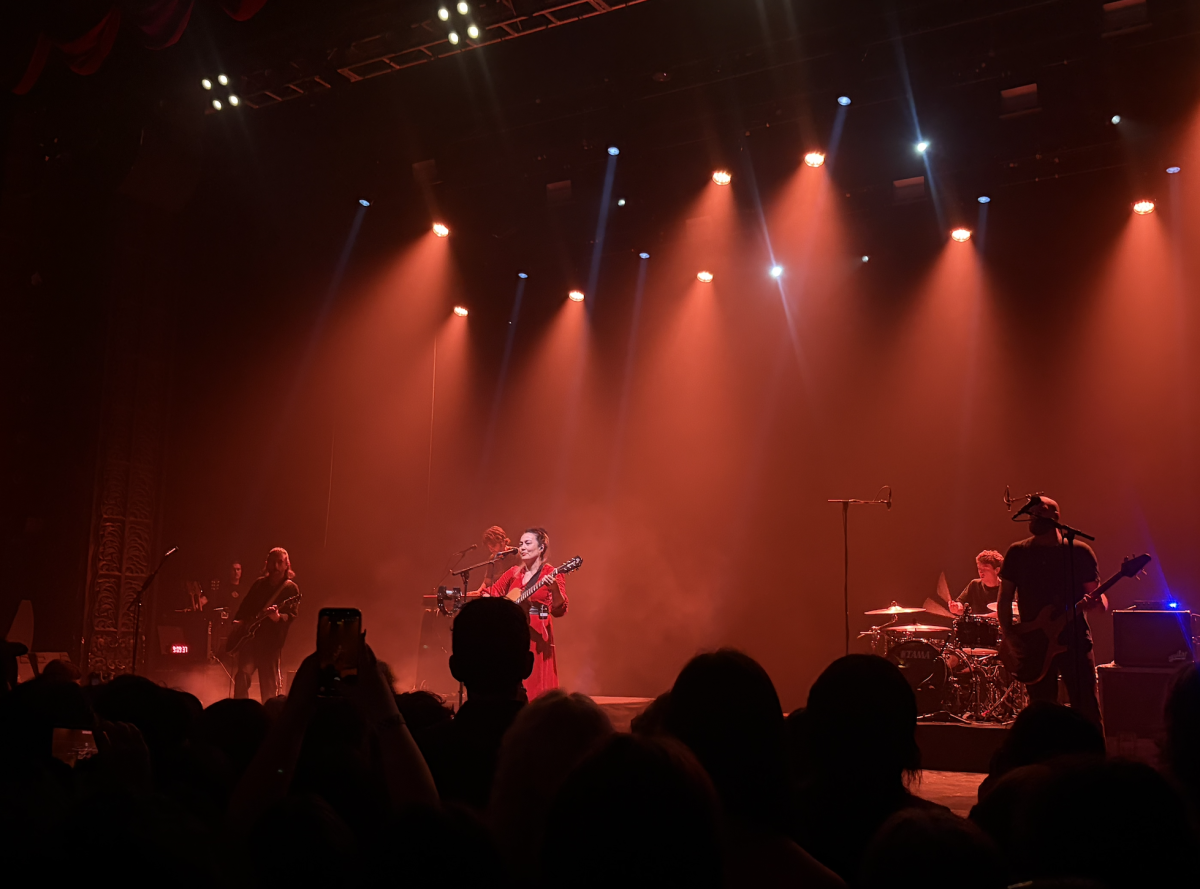
The night continued with many dance, singing and band performances, showcasing the significant amount of time and effort poured into this event by SDSU students.
“I spent several months planning this, and it was really satisfying hearing everyone say they had a good time,” Llanes said. “That was something that felt very close to my heart — just having everyone dance and enjoy their time with their friends is what made the event successful to me.”