When female athletes at Stephen F. Austin University filed a federal sex discrimination lawsuit on July 1, their message was clear: they weren’t just fighting to save their seasons – they were fighting for the future of women’s college athletics.
Their case, filed in U.S. District Court in Texas, challenges SFA’s abrupt elimination of its women’s beach volleyball, bowling and golf programs. It marks the first significant Title IX class action lawsuit to emerge after the NCAA approved a $2.8 billion antitrust settlement in June—an agreement that will compensate college athletes dating back a decade and transform how schools manage athletic budgets. The case has sparked national questions about whether more institutions will cut non-revenue sports to stay afloat.
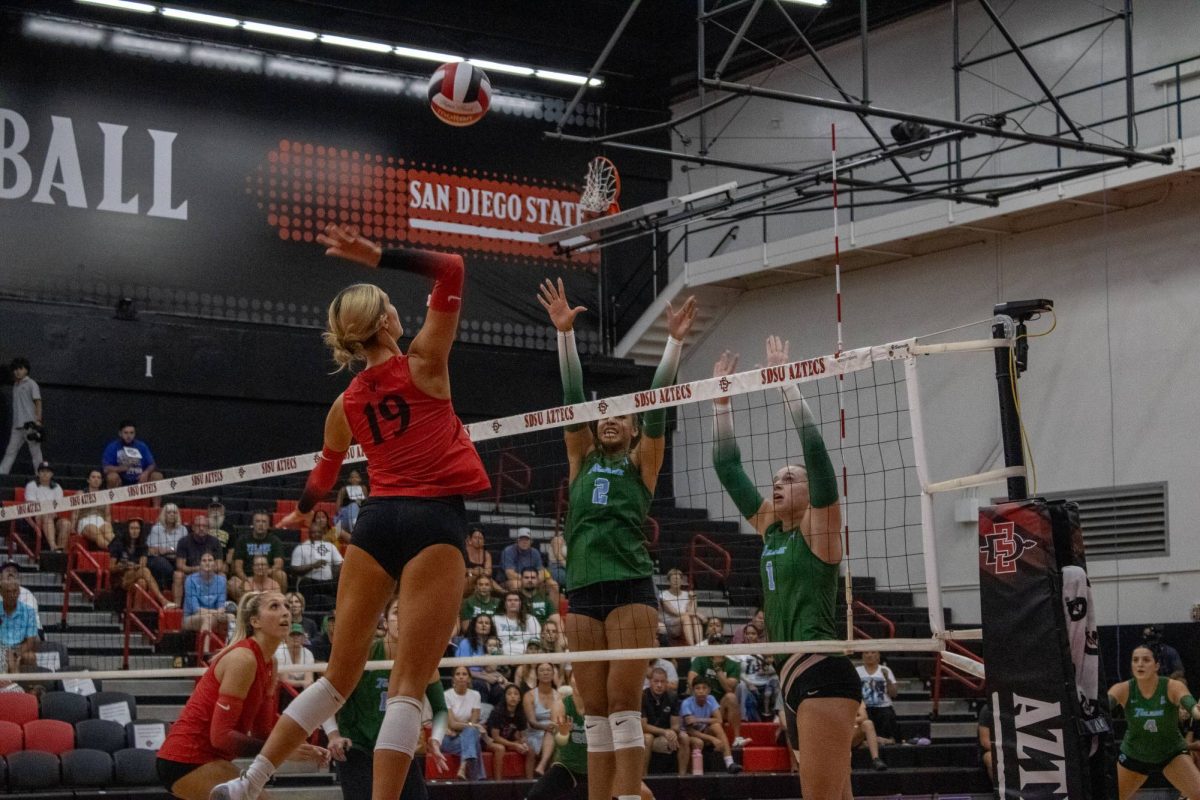
Now, with the legal spotlight shining brightly on gender equity, San Diego State University is among the schools facing questions about its athletic future.
A Test Case in Texas
SFA’s announcement in May came as a surprise to its athletes. Members of the women’s beach volleyball, bowling and golf teams were given less than a day’s notice to join a Zoom meeting, where administrators, citing financial pressures, announced the immediate termination of their programs.
The school is not only facing criticism over how the decision was communicated, but also legal firepower.
Arthur Bryant, one of the nation’s leading Title IX attorneys, is representing the SFA athletes. His team argues the school was already out of compliance with Title IX based on enrollment and participation data, and that cutting more women’s teams only deepened the disparity.
“SFA’s elimination of the women’s beach volleyball, bowling and golf teams is a blatant violation of Title IX,” Bryant said in a statement. “We reviewed the facts and the law with the school, asked it to reinstate the teams and agree to comply with Title IX, and it refused. So our clients are doing what SFA is requiring them to do—hold the school accountable in court.”
National Domino Effect?
The lawsuit could set a powerful precedent. From his statement, Bryant believes SFA’s case is “only the beginning” of what’s to come as schools confront the financial strain of compensating athletes.
Under the NCAA’s new framework, schools in major conferences are projected to share roughly $20 million in average athletic revenue per year with athletes through revenue sharing, money likely from existing athletic budgets. Non-revenue sports, such as track, swimming and volleyball, are the most vulnerable.
At Washington State, athletes were told in June that their track and field team would become “distance-focused,” with all field events eliminated. Grand Canyon University, despite a Final Four appearance, cut its men’s volleyball team this spring. Georgia Tech slashed swimmers mid-season and Michigan’s track program trimmed its roster to meet NCAA caps.

SDSU’s Response: Caution, Then Coldness
Given this shifting national landscape, The Daily Aztec contacted San Diego State Athletics on July 1 to ask if the university was considering cutting any of its varsity teams, or if it could publicly reaffirm its commitment to maintaining Title IX compliance.
SDSU responded with a three-paragraph statement:
“While we cannot speak to the lawsuit at Stephen F. Austin University, we can provide SDSU-specific information.
We are closely monitoring developments and conversations across the nation and at the federal level. Ensuring equitable participation opportunities for our student-athletes in accordance with Title IX is a foundational value of our athletics program. We regularly review our compliance protocols and participation data to maintain alignment with federal regulations and to foster a culture of inclusion and fairness.
We know that financial challenges and changes in college-level sports can make things complicated, but we remain committed to actions in the best interest of our student-athletes, both on the field and in the classroom.”
When The Daily Aztec followed up to clarify whether SDSU is still considering eliminating any programs, a university spokesperson replied bluntly: “We more than answered your questions with a three-paragraph statement. We have nothing more to add. Thank you.”
What’s Next?
The SFA case now moves toward a preliminary injunction hearing that could determine whether the school must preserve the three teams during litigation. Plaintiffs women’s volleyball player Sophia Myers and women’s bowling player Kara Kay say they’re heartbroken but determined.
“It is truly sad and disappointing that we have to sue SFA to make it comply with Title IX, provide women with equal opportunities, and preserve our teams,” said Myers. “But we have to stand up for our rights and fight what is right, including the gender equity Title IX requires.”
For now, San Diego State remains untouched by the wave of cuts and lawsuits. But the university’s unwillingness to offer a clear yes or no when asked if programs are safe speaks volumes. As women’s teams teeter on the edge nationwide, silence could soon sound a lot like complicity.
And if SDSU ever follows SFA’s path, history now shows the athletes won’t go quietly.