Starting this year, the School of Television, Theatre and Film is implementing a new policy of limiting each student organization to one supported performance in the Experimental Theatre per year.
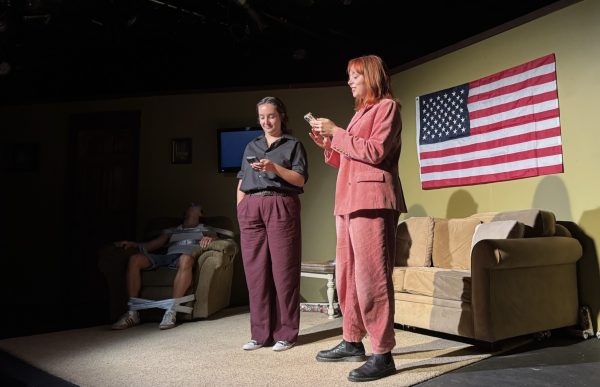
Skull and Dagger’s Fall 2025 production, “Exit Pursued by a Bear,” was a smashing success, but finding an off-campus venue for the performance was a significant struggle for Directors Kylee Kyte and Olivia Newell.
“It was just reaching out to venue, after venue, after venue and getting rejected again, and again and again,” said Kyte, a fifth-year social work major and theatre minor.
Kyte and Newell, a fifth-year sustainability and general theatre major, said that in Spring 2025, the School of TTF sent an email to all the student organizations about the policy. The email said that due to the high demand from the seven student theatre clubs, combined with limited staffing and budget cuts, they are no longer able to support more than one show per organization.
“It was getting to a point where all the departments were super overwhelmed with all the work that they were having to support,” Kyte said. “This was their way of still allowing each student organization to present something in an SDSU theatre space while minimizing the amount of stress.”
“It also came out in conjunction with a lot of the CSU budget cuts that were happening,” Newell said. “A lot of it is also at the same time that a lot of classes that used to be offered every semester were only going to be offered once a year.”
The previous policy was that student organizations could hold two supported shows per year in the Experimental Theatre, according to Newell.
Kyte said clubs can still host more than one show in the Experimental Theatre, but they won’t have access to any of the department’s resources or designer technology. The school suggested that any unsupported shows be something simple, such as a staged reading.
“It’s not in any way that the Theatre Department does not support us, it’s just that they’re so overwhelmed and they’re trying to support us in the best way they can,” Newell said.
For their Fall 2025 show, Skull and Dagger rented MOXIE Theatre, an idea that came from Katie Turner, assistant director of the School of TTF and faculty advisor for the club.
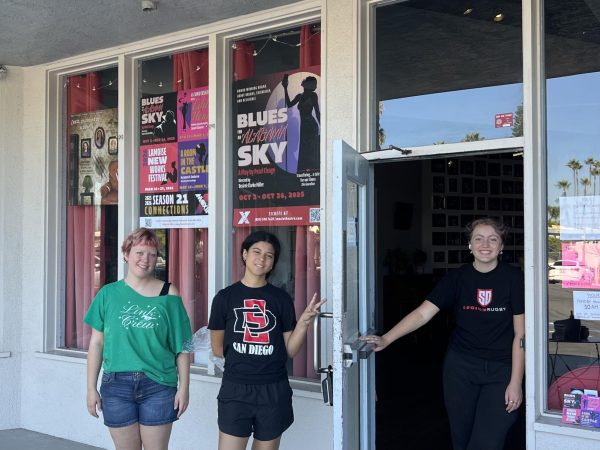
“We went in knowing that we were not going to be performing in the Experimental Theatre and would likely be off campus,” Newell said. “It definitely threw off what Skull and Dagger was used to, and it was a struggle at times to find a venue because that was a new process for us as directors and for Skull and Dagger as a club, but it really did push us to find some cool new opportunities and ideas.”
To the directors’ surprise, Skull and Dagger was able to use the venue for free.
“It was the most serendipitous timing in the world. It just so happened to coincide with MOXIE Theatre receiving a grant from the Prebys Foundation that covered the rental costs for theatre companies that either don’t have a permanent theatre space or that just need a space to perform,” Newell said.
Skull and Dagger is the first organization to utilize the grant.
“It was one of the most incredibly timed experiences of my entire life,” Newell said. “I was near tears when we found out that it was going to be a free reservation, and it totally allowed us to put up a full-fledged performance.”
“It really pushed us to put on this amazing, professional production that ended up reaching a wider audience,” Kyte said.
MOXIE Theatre had an open house to highlight the grant. Kyte and Newell connected with attendees, many of them members of the theatre industry looking to utilize the grant as well.
“Even though it’s unfortunate that only one show is allowed on campus in the Experimental Theatre, it led to this really beautiful thing happening with us and with MOXIE Theatre,” Kyte said.
“Exit Pursued by a Bear” was the first SDSU student theatre show to be held off campus. Since then, other clubs, such as Black Renaissance and Musical Theatre Club, have reached out to Skull and Dagger about how they secured the venue.
“It’s just been a really cool, community-building opportunity,” Kyte said.
“It seems to have started a nice, lovely trend for the other clubs to know that there are resources available for them to do unsupported shows fully off-campus,” Newell said.
Although Kyte and Newell said the policy initially came as a shock, they believe it pushed them to do something different and showed them the San Diego community supports student theatre and wants to see it thrive. The challenge, albeit stressful, became a rewarding and transformative learning experience for the two.