

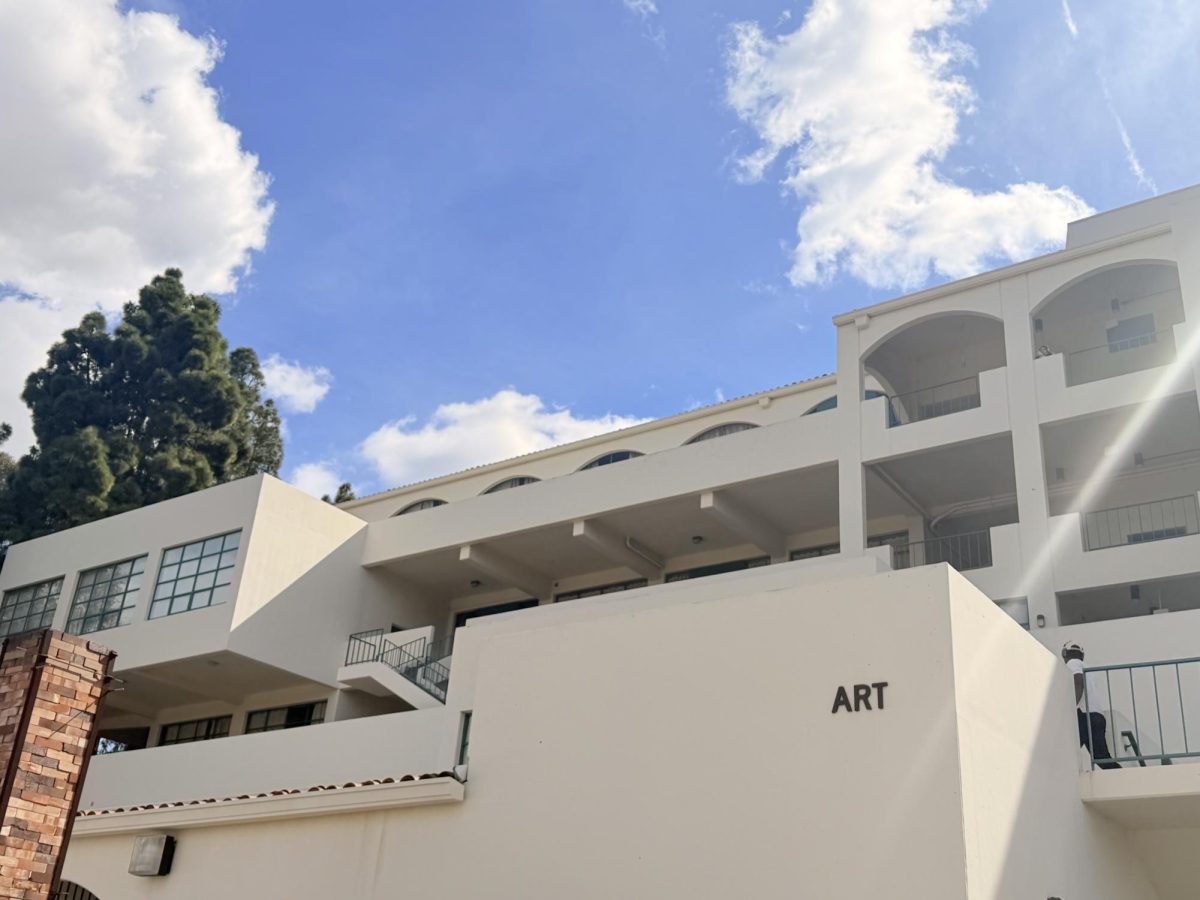
After five years, the School of Art and Design’s Amplify lecture series has come to an end, with fall 2025 being its last semester. Its final theme, “Spaces of Intention: Art, Design, and Curatorial Practices,” was centered around the idea that space isn’t neutral, but formed through cultural, social and political forces.
Amplify was added to the foundations course ART 104: Artists and Designers in Real Time at the end of 2020. The program focused on “the production of historically marginalized populations, in order to equip students with the necessary contexts and critical perspectives to participate and engage with urgent polemics and debates in contemporary cultural production,” according to the school’s diversity and inclusion statement.
The lecture series, while required for students in the class, was also open for anyone to attend.
In fall 2025, lectures took place on Thursdays from 5:30 to 6:45 p.m. and featured 11 guest speakers.
The program “has been removed in order to create a more flexible and inclusive structure for the course,” said Claudia Cano, the course’s professor. This change allows us to focus on a broader range of contemporary perspectives, practices, and experiences within the field of art and design. Rather than organizing the class around a single concept, we are now highlighting the diversity of creative approaches and real-time examples presented by our speakers and course materials.”
Eunice Uhm, an assistant professor of art history at SDSU, gave her guest lecture on representations of domesticity and diaspora from Asian women artists as part of the series. Uhm posed thoughtful questions to students, such as, “When you think of ‘domestic space,’ what comes to mind?” and “How do government policies determine who can have or make a home?”
Without knowledge of Amplify’s imminent departure, Uhm shared her concerns about preserving freedom of speech within academics and the rollback of diversity initiatives.
“There’s such a heavy policing around what can be taught, how it can be taught, what we can say, what we cannot say as a professor and what we can tell our students,” Uhm said. “There’s so much fear around it.”
Uhm feels that highlighting diverse voices is important for questioning existing structures of racism, sexism and classism.
“We are so diverse, so why wouldn’t we teach art history that reflects our student body? Why wouldn’t we hire professors who reflect our student body?” Uhm said. “I think it’s a form of care.”
The course’s professor also shared this sentiment.
“Everybody has a place in this world and providing the space to artists that have not been taken into account, it’s important,” Cano said.
Second-year student Taitan Khatiya took ART 104 and found it fascinating to learn about artists outside of people’s general knowledge – ones lesser known than Leonardo Da Vinci and other Renaissance era painters. Khatiya found that hearing about each artist’s unique stories was the most compelling part of the course.
“I think it’s really relatable to hear about their childhoods and things they were brought up on,” Khatiya said, mentioning Alexa Ramírez Posada as one of his favorite speakers.
Ramírez Posada co-curated an exhibition last semester at SDSU with another guest speaker, William Camargo, called “Reencuentros: allá nos vemos/See you there.” The gallery focused on how seven artists “encounter time, home, (dis)placement, movement, stasis and becoming against the backdrop of the permeable U.S./Mexico border,” according to its description.
Ramírez Posada’s work is informed by queer, immigrant and Latinx history.
Cano wants to focus on inviting the community to connect and learn from professional artists.
She’s already in the process of booking speakers for the spring semester.
“[Students] can connect with professionals. They also are inspired to have critical thinking to network with the professionals as well. It’s also a way of having context awareness of contemporary issues,” Cano said.
While worried about the changing political landscape, Uhm has hope for a stronger community in the art world.
“I do think that there is a stronger sense of resistance and community that’s emerging in these experimental avant-garde places, and artists and scholars start speaking back,” Uhm said. “Like any kind of activism, I think there is a force against another force. Perhaps it’s more divisive, but I think we are all just navigating this new cultural landscape.”


