Five years into the NIL era of collegiate athletics, NIL and the transfer portal remain among the most controversial and confusing topics in college athletics. The ever-changing landscape and seemingly endless cycle of NIL rules and regulations have shaped college athletics.
Because of the constant change in NIL rules and player movement, college athletic departments have begun instituting their own NIL departments and teams to help navigate the landscape.
Starting back in 2019, California passed a groundbreaking law that set the stage for where NIL is today. The Fair Pay to Play Act allowed college athletes to gather profits while retaining their athletic eligibility. This law was the first domino to fall, and the rest of the country would soon follow suit. Florida would pass its own law in 2020, leading up to the NCAA’s decision on July 1, 2021. Since then, college athletics hasn’t looked back.
Now, student-athletes are bouncing from school to school year to year, while universities are fighting to retain talent and recruit the best college athletes on the open market.
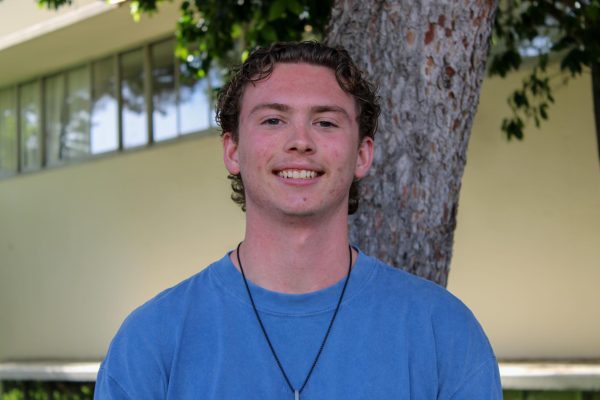
“Student-athletes, in a general sense, are chasing the money,” said Abby Crawford, SDSU’s NIL coordinator.
. With programs and teams having to act like professional front offices, with general managers and public relations staff in place to determine which student-athletes they would like to retain and who they will let leave after the season, while also balancing the financial side of the process in terms of how much money each player’s loss will cost the program.
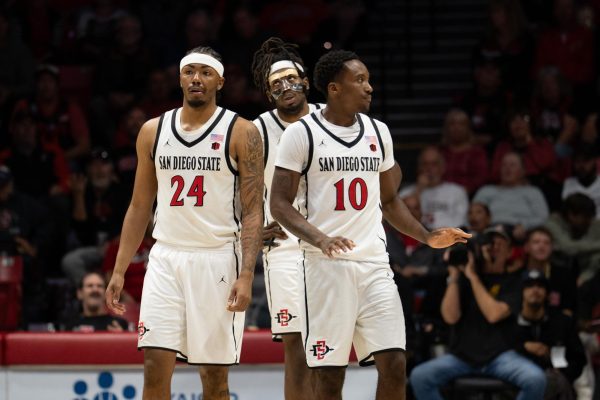
“We talk about it every day, who wants to come back? Who do we want back? You have a budget now, you have a payroll, and you’re making decisions like GMs make,” said men’s basketball head coach Brian Dutcher. “Who can help us win, and at what price are we willing to pay for that player to come back?”
For Crawford and the rest of the NIL department at SDSU, the job is not to determine how much a team will pay a player, but rather to provide guidance and ensure student-athlete compliance in third-party negotiations with the College Sports Commission (CSC).
“The team’s GM or Director of Operations works behind closed doors and creates a budget, and they come to me, and I just help to tie up all the loose ends,” Crawford said. “Ultimately, it’s up to the teams. I have no say in it. I don’t advise on the process for any teams.”
Crawford even went a step further to say, “NIL is not employment; it is not pay for play, so it cannot and is not tied to on-field performance, academics, or attending San Diego State. Revenue sharing is meant to compensate the student-athletes for their name, image, and likeness.”
Revenue sharing was capped at $20.5 million for the 2025-26 year, with “increases in subsequent years.” This fund is the University directly paying student-athletes for their on-field performance to recruit or retain their talent at SDSU. NIL is brand deals, marketing, and the ability for student-athletes to capitalize on their brand.
The public’s colluded perception of NIL and revenue sharing has driven many misconceptions, according to both Crawford and Brenden Hill, SDSU’s assistant athletic director of student-athlete development and NIL.
“We’ve always battled the misconception of what NIL is versus what revenue sharing is,” Hill said. “True marketing deals, endorsement deals, brand partnerships, and creator economy: That’s what NIL was intended to be. I think it got co-opted by what was happening with collectives and revenue sharing.”
In June 2025, San Diego State University Athletics announced the Student-Athlete Retention and Recruitment Fund, which allows donations and revenue sharing between donors and SDSU to directly benefit student-athletes and support the recruitment and retention of talent for SDSU sports.
“It’s huge for student athletes. A few years ago, we weren’t even thinking about NIL, but now it’s a crazy thing,” Trey White, a former SDSU football player, said back in December. “I’m glad that a lot of student athletes are able to take advantage of it, using our name, image and likeness to promote ourselves and get a little extra money in our pockets as college students.”
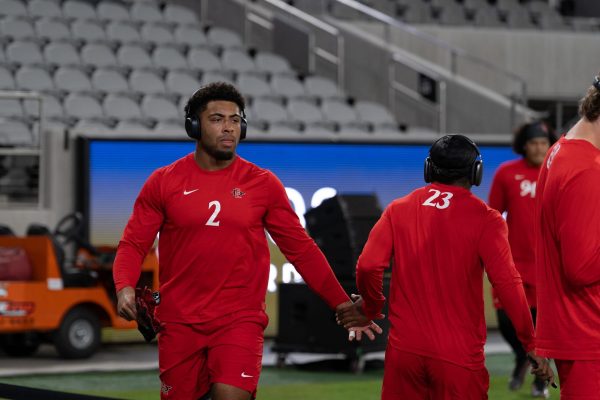
White would later transfer from SDSU after the Aztecs’ football season ended. Utilizing the transfer portal, revenue sharing and NIL, White left the Aztecs for Texas Tech University, which reportedly spent $28 to $30 million on their football team during the 2025 season, which resulted in a College Football Playoff appearance for Texas Tech.
The next layer of confusion and controversy in the NIL and revenue-sharing world has been the idea of fair market value. In June 2025, under a new NCAA settlement, new rules and regulations were instituted, requiring deals over $600 to be reported to ensure they meet “fair market value.”
“I just go back to basic economics, your fair market value is whatever someone’s willing to pay you,” Hill said. “Your fair market value is how you come to terms with the other side, what the student-athlete and the brand come to an agreement on. If I offer you x amount of money and you agree to it, that’s your fair market value.”
Hill sees difficulties in regulating how much a student-athlete can earn because determining fair market value is difficult.
“Trying to regulate the market at large is creating more pain, work compliance issues and cheating and circumvention,” Hill said. “I’m one of those people who believes in a free market, and if people are crazy enough to overpay or make bad financial decisions for talent (student athletes), then they’ll go bankrupt. Trying to cap things creates more chaos than if you let the free market dictate things for itself.”
The future of college athletics remains unsettled, with ongoing debates over regulation and structure.
“Of course, things are being figured out along the way by the people who work in this space and by the people who govern us. It’s really hard to have an umbrella for the whole country and all the NCAA schools,” Crawford said. “We like to say that we are building the plane as we’re flying it, which sounds bad, but we’re doing it, and we are still in the air.”