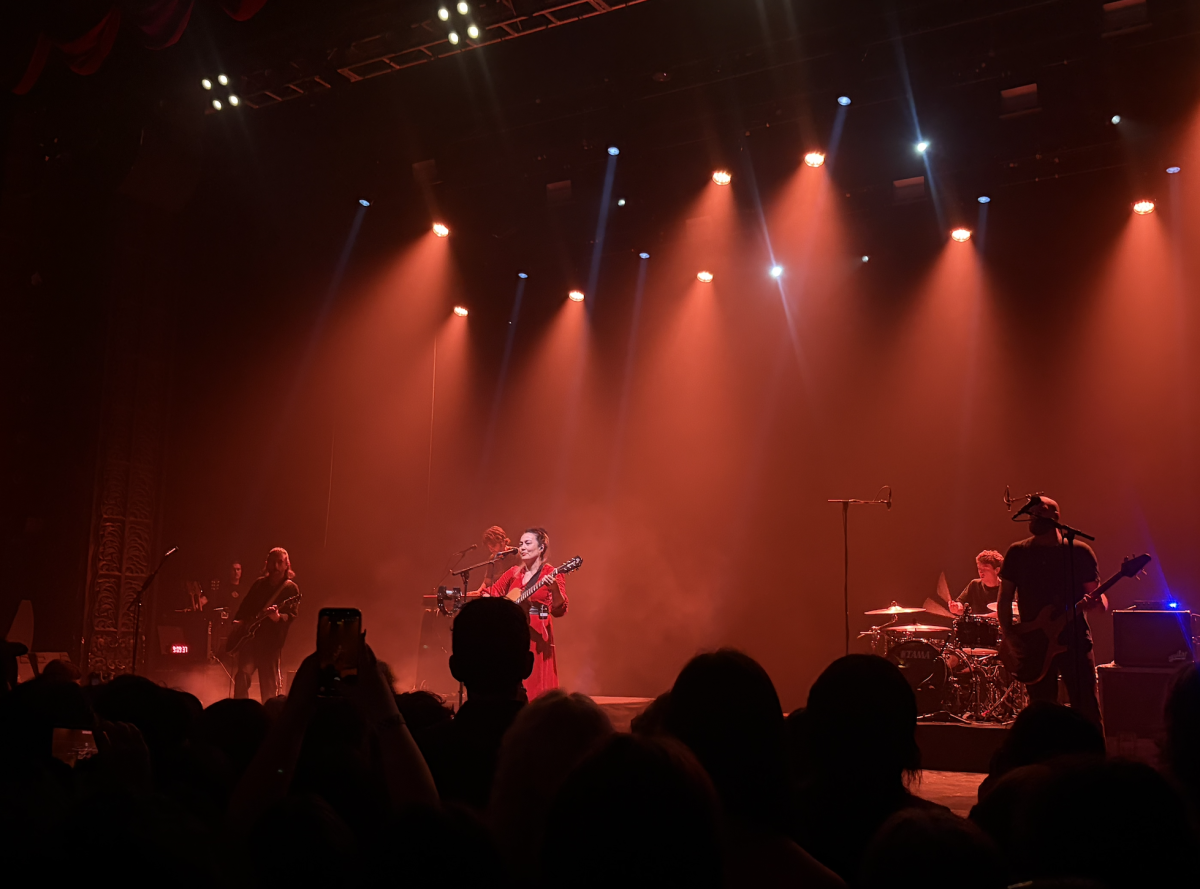
Some of the world’s most famous artworks were created to express feelings that words couldn’t. Vincent van Gogh painted “The Starry Night” from the inside of a mental asylum. Through his art, he was able to express his emotional turmoil, explore themes of hope versus despair and acknowledge his own mortality.
The Prison Arts Collective (PAC) seeks to provide access to creative expression in prisons across California.
PAC brings college students and instructors inside prisons to teach art classes such as introductory drawing, acting and creative writing to incarcerated individuals. They also allow experienced, incarcerated artists to teach these classes as “facilitators.”
These programs provide opportunities for participants to work with others on projects and develop foundational artistic skills while growing as leaders.
Annie Buckley, an SDSU director and founder of PAC, created the program in 2013 to bridge the gap between incarcerated individuals and their community on the outside.
In a documentary about PAC shown on Sept. 29 in Montezuma Hall, Buckley said she hopes that people won’t feel a sense of “us versus them” when it comes to incarcerated individuals.
“I hope that people who see this are inspired to see themselves as part of a bigger whole,” Buckley said.
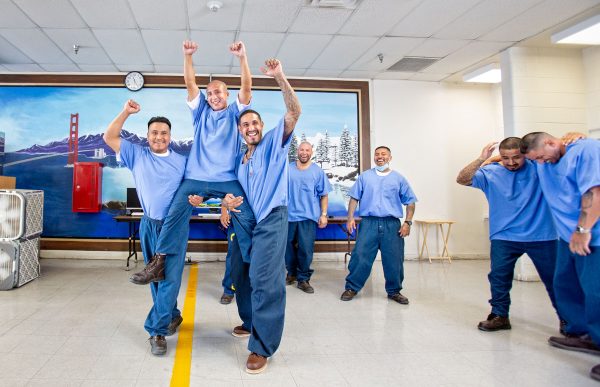
PAC also focuses on art as a method of reform.
Amelia, a PAC participant at the California Institution for Women, identified by her first name only for privacy reasons, says that art gives her an outlet to express her emotions in a healthy way.
“There’s nothing wrong with having a big heart and being extremely sensitive or having these big emotions,” Amelia said. “But Prison Arts Collective has taught me a way to channel that and a way to express it.”
PAC facilitators must complete a three-month-long training program where they learn university-level content in both the arts and education, and receive hands-on training on how to conduct an art course.
Former PAC facilitator, Dominique Tanks, said that PAC’s training program allowed him to become a stronger and more effective communicator, while also creating an enriching and educational space that allowed his students to grow as artists and team players.
Sentenced to 50 years to life at age 16, Tanks was informed about rehabilitative programs for incarcerated people and eventually discovered PAC, a path that would end up forever changing his life for the better.
During his time participating as a facilitator, Tanks was able to develop many life skills through the program and the instructional role it gave him, such as leadership and the ability to connect with people. Tanks was able to transfer the skills he acquired from PAC to life outside of the carceral system.
He is now released and works as a community liaison for the Amity Foundation, a nonprofit organization focused on aiding marginalized individuals experiencing issues such as homelessness or incarceration. His position requires him to use written communication in a way that both informs people about the organization and its mission and genuinely touches their hearts and emotions.
“A lot of those nuances I learned and developed through the Prison Arts Collective program,” Tanks said.
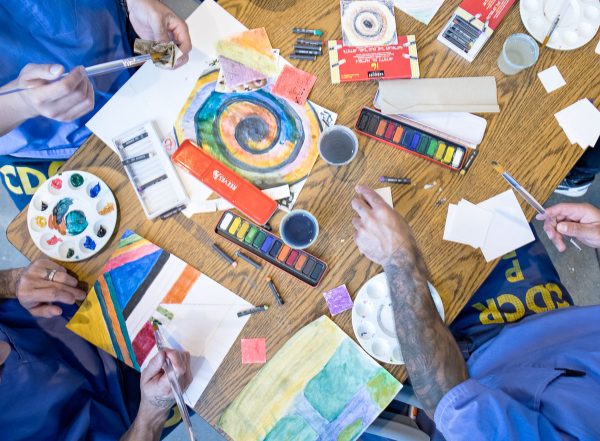
The program also bridges the gap between incarcerated individuals and the outside community by bringing participants’ artworks to the public.
Three years after PAC’s inception, Buckley coordinated with the CB1 Art Gallery in Los Angeles to create an exhibition that showcased artworks from the program. Buckley described how bringing these artworks to the outside is important to participants’ connections with their families.
One PAC participant said that after his daughter saw his artwork on display, she would go around proudly telling her friends that her dad is an artist, according to Buckley.
During a panel about the program, Carlo Jacobo, PAC’s exhibitions assistant, discussed how art is especially important to incarcerated individuals.
“It helps people reimagine themselves,” Jacobo said. “… Which I think is the most important part for people who are deprived of their identity and their expression.”
Currently, PAC has approximately 9,500 incarcerated participants, 1,025 community participants and 150 California State University students involved in its program.
This builds toward PAC’s goal of creating a “collaborative and inclusive society where everyone has access to the arts to promote wellbeing and empowerment,” according to PAC’s website.
“I think it’s really important that everyone has access to the possibilities of imagination and transformation and joy and self-understanding and connection that the arts give us,” Buckley said. “That is the bigger goal from which Prison Arts Collective grew.”