

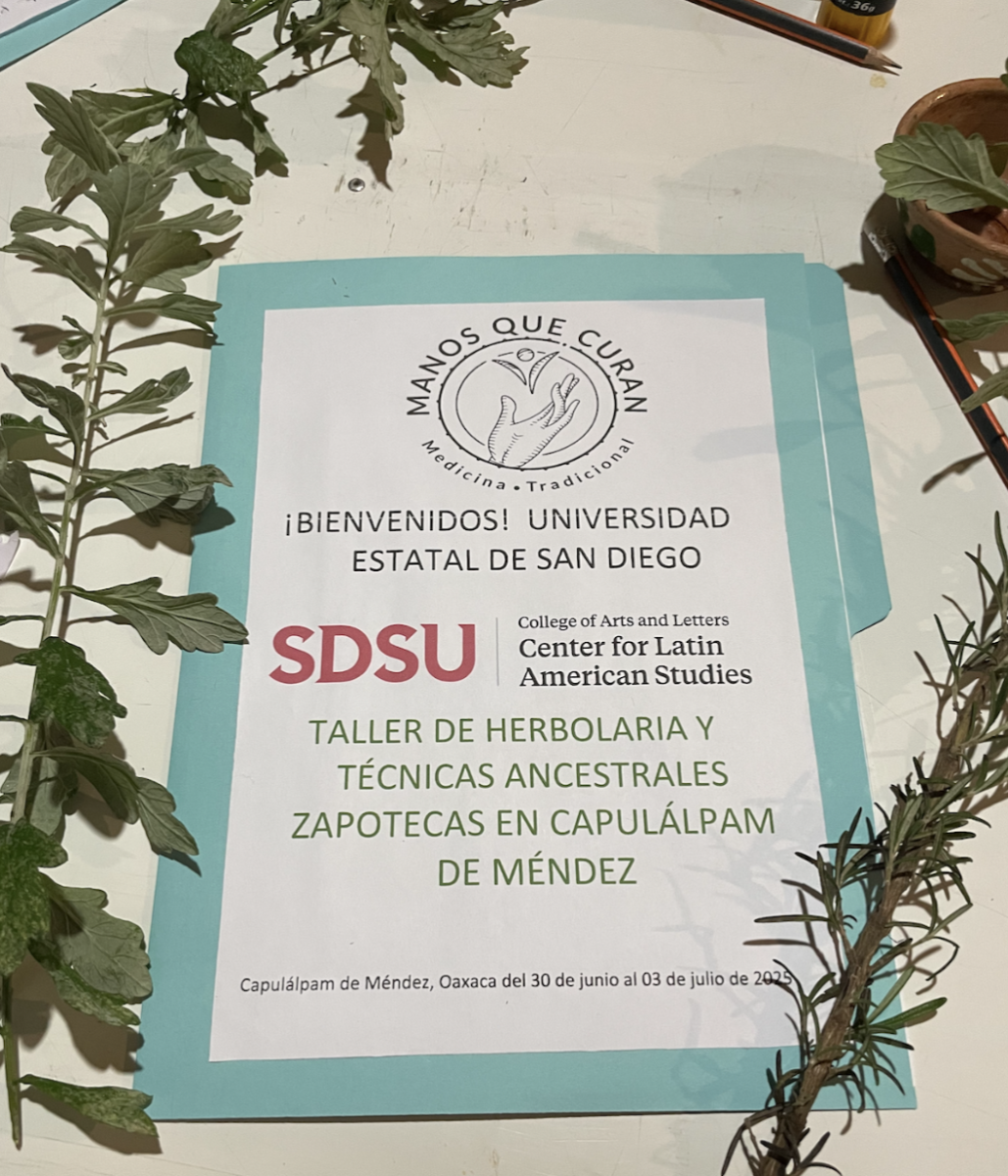
SDSU’s Oaxaca Center for Mesoamerican Studies opened in May 2022 in Oaxaca, Mexico, which expanded into a site for research, teaching and reviving indigenous Mixtec culture and language for SDSU students.
Dr. Ramona Pérez, a professor of anthropology, director of the Center for Latin American Studies and chair of the Aztec Identity Initiative at SDSU, describes the center as an axis for academic work that includes community-based research, language immersion, public health rotations and culinary exchanges.
Despite the success of the center, its federal funding has fluctuated and it is now relying on financial support from local organizations and nonprofits.
In addition to funding threats, many indigenous languages the center supports face threats from globalization and cultural assimilation, and cutting funding can undermine the work of faculty like Pérez to educate students about languages and cultures, such as Mixtec.
“There’s not a single Oaxaca program,” said Pérez. “Almost everything we do in Oaxaca is about serving communities, documenting food traditions, supporting traditional healers and midwives, and training students to do ethical, community-led research.”
The revival and documentation of Mixtec recipes and healing guides were the founding focal points of SDSU’s Oaxaca program, according to Pérez.
“We just finished a project with the Mixtec community up in the Mixtec Baja, where they were afraid that their community members in the US and even their own youth were losing their traditional knowledge of food,” said Pérez.
These culinary exchanges have made their way onto campus, according to Pérez. Mixtec recipes taught by Oaxacan chefs in Michelin-recognized kitchens have influenced the offerings at Aztec Shops, which began including Oaxacan coffee and hot chocolate in 2023.
“I don’t know if you’ve noticed, but in the Aztec shop over at East Commons, you can get Oaxacan coffee and hot chocolate,” said Pérez.
The center offers field schools that place graduate and advanced undergraduates on multi-year projects, such as documenting Mixtec recipes and healing practices.
It also offers a six-week language immersion program in Mixtec and Zapotec, another native language, for doctoral students, physicians, clergy and teachers working with Indigenous communities, according to Pérez.
The Mixtec language, also known as the “language of the rain,” is a key marker of Mixtec identity and is spoken by people living in the mountain regions of Oaxaca.
Despite being integral to their community, Mixtec is spoken less, and Spanish is spoken more by younger generations. Because there are over 50 Mixtec variants, and the education system in Mexico uses a Spanish-language curriculum, it often encourages children to speak only Spanish, according to Cultural Survival. However, revival programs, like SDSU’s, are becoming increasingly prevalent to prevent the language and its traditions from being eradicated.
“When I went over the summer, our research was centered around traditional medicine,” said graduate student Alejandra Torres Gómez. “We worked with curanderas, who are natural healers in the community.”
Gómez describes the work as “hands-on” and “extremely interactive.”
“The work we did over there taught me so many amazing things, and I really want to go back,” she said.
SDSU partners with La Salle University in Oaxaca, where students collaborate with archives and libraries, including the state archives of Oaxaca. Students can then learn digitization and archival methods used to preserve Mixtec history.
According to SDSU President Adela de la Torre, the center has become “a hub of transformative experiences” within two years, supporting research projects and study-abroad and internship programs.
“When I went to Oaxaca, the main project we were working on was putting together and documenting recipes from the Mixteco community,” said graduate student Kaeleigh Hartman. “It was for people who immigrated to the United States, allowing them to make native recipes and still have a taste of home.”
These projects are becoming more difficult to finance. A National Science Foundation grant supporting international research was suspended, and U.S. Department of Agriculture funds were reduced, cutting student capacity from more than 20 in past years to about a dozen next year, according to Pérez.
Graduate students continue to receive support through the Tinker Foundation, which provides about $25,000 annually through 2030.
Associated Students offers up to $40,000 for Oaxaca projects that support Indigenous communities, along with other study abroad scholarships, according to Pérez.
“I was a little nervous because it was a month-long program and I had to ask for time off from work, but thankfully, Doctura Pérez encouraged me to apply for scholarships/grants, which helped me a lot,” said Gómez.
“There’s an amazing array of projects,” said Pérez. “We teach, publish and build with communities, and we’re working to make it easier for students to find their way in.”

![Courtesy Photo: Greg Thames [pulled from Pexels website as free use image]](https://thedailyaztec.com/wp-content/uploads/2026/05/Screenshot-2026-05-15-at-11.36.27-AM-1200x820.png)