As we begin the month of March, let’s reflect on one of the most controversial topics of the year: language. Yes, language.
Most recently, the Spanish language has been under attack for its presence at the Super Bowl halftime show and for trying to erase “American” culture.
However, after 250 years of the United States existing without an official language, the question is raised: Does English really reflect all of us?
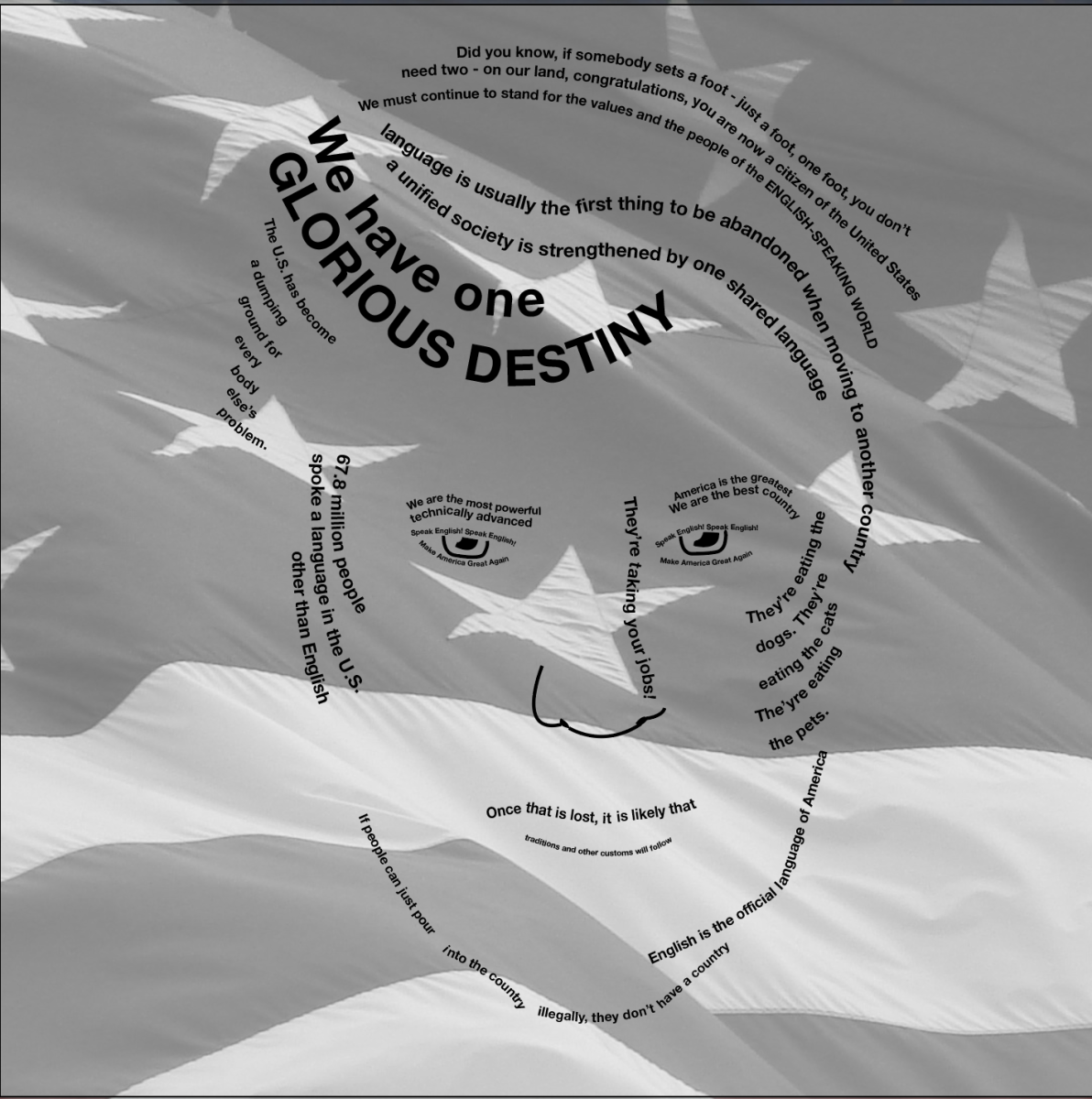
Up until a year ago, there was no formal documentation that ever designated English as the official language of the U.S. In fact, it was only on March 1, 2025, when the Trump administration passed an executive order for our national language.
The order stated that a unified society is further strengthened by one shared language. Additionally, it brought attention to the language used in the governing papers of the country, the Constitution and the Declaration of Independence, which are written in English.
However, a country is best represented by the citizens who inhabit it, meaning language goes beyond executive orders and systems of communication. According to the United States Census Bureau, 67.8 million people in the U.S. spoke a language other than English at home in 2019.
In San Diego alone, language is highly associated with cultural expression and community. Being a border city with Mexico allows us to take part in multiculturalism, the coexistence of cultural diversity.
But in reality, our city represents more than just the Spanish language and Latinx identity. We are constantly exposed to different parts of the world through what we see, hear and taste every day.
The Convoy District is the largest Pan-Asian business district in the U.S., San Diego’s Little Italy is the largest one in the U.S. and Barrio Logan is a district that is home to Chicano culture, art and activism.
Convoy is not only home to some of the most delicious food in San Diego, but the district consists of more than 450,000 members of the Asian and Pacific Islander communities. It has allowed hundreds of businesses run by multi-generational members over the years to grow. In this neighborhood, one can find supermarkets, restaurants, entertainment, churches and medical and legal offices.
Besides having one of the best farmers’ markets in San Diego, the Little Italy association
has been working on reviving the neighborhood. They display the history of the neighborhood through public art displays and with businesses run by both Italian-American and non-Italian owners. According to their website, “San Diego’s Little Italy is not only a model urban neighborhood for the City of San Diego, but is also serving as a model for the handful of Little Italys remaining throughout the country.”
Barrio Logan was born when Chicano students fought for their place in their community. Today, Chicano Park is considered a National Historic Landmark where cultural traditions come to life. Artist collectives, galleries, car shows, restaurants and multiple businesses work to preserve Chicano identity and strength.
Even at SDSU, students are expected to recognize the history of the land they reside on. According to the Division of Student Affairs and Campus Diversity, SDSU was built on land that was never legally ceded by the Kumeyaay people.
These are only a few familiar neighborhoods in our city where we can see how much “American” culture depends on immigrants, all relying on shared traditions, community and language.
Being labeled as the “melting pot” for a long time, this country is often believed to be the result of immigrants abandoning their country’s culture and adopting American culture.
Language is usually the first thing to be abandoned when you move to another country, despite it sometimes being the only thing you have left to connect with your identity. Sometimes language is what helps individuals find the sources they need to succeed in a new environment.
Once that is lost, traditions and other customs will likely follow.
According to the Pew Research Center, as of last June, 51.9 million immigrants live in the U.S. Once that population starts believing that the only language they should be speaking is English (because anything else threatens what America “should look like”) is when we start to lose states, cities and neighborhoods that value inclusivity.
If Spanish or any other language is enough of a threat to divide the “quintessential American” culture, then maybe the problem never laid with the language, but with a weak foundation of what is thought to be a “true American.”