Sitting in my RWS 290 class during a lecture about professionalism, I found myself reflecting on what the word meant to me. To me, professionalism always carried this weight of fitting into a tiny box of perfection. Dressing the right way, sitting up straight, speaking properly, presenting yourself in a high standard, and displaying deep knowledge in a specialized field.
This led me to question: What makes a professional in this diverse world? I believe it is not so much the outward appearance of an individual, but rather the actions and behaviors one displays. For example, a tenacious, respectful and open-minded individual who strives for success in their own field constitutes a professional.
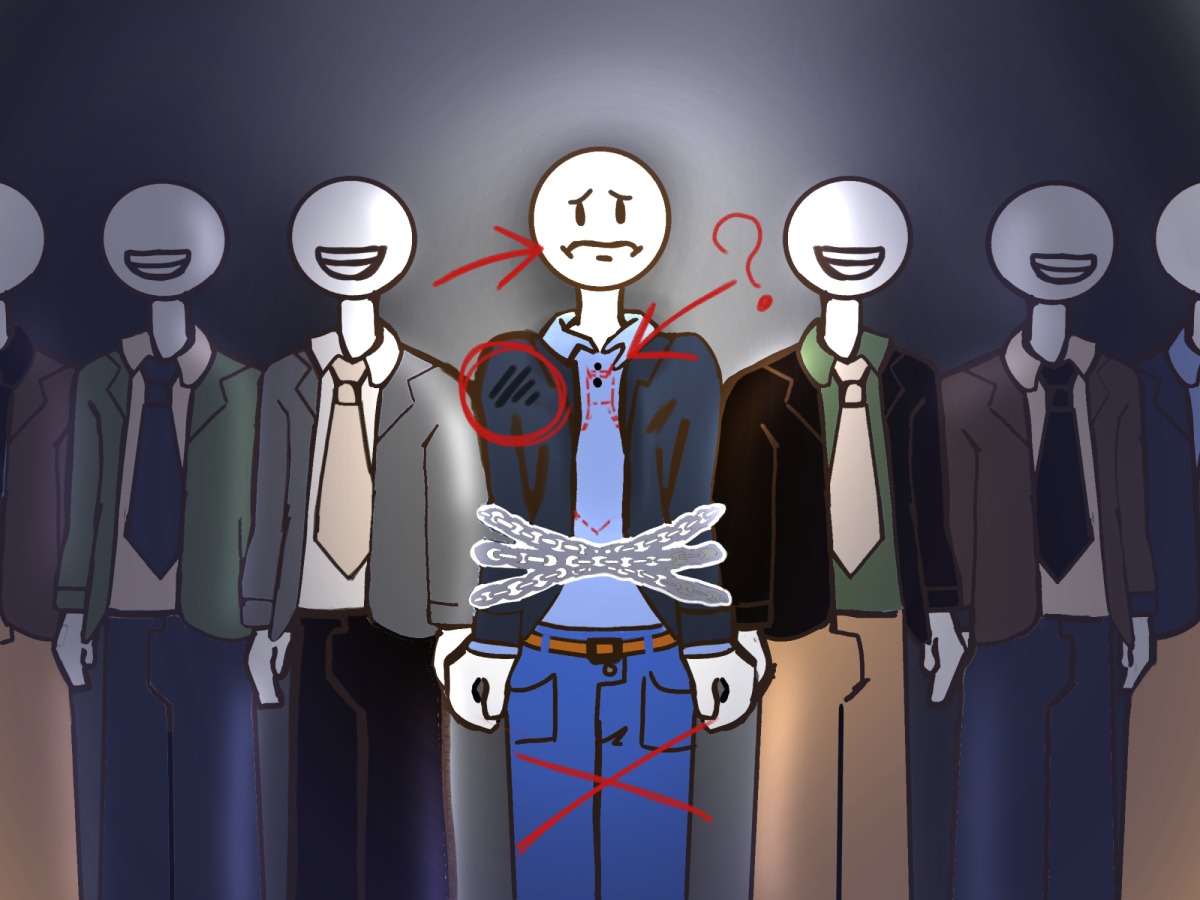
The outdated and stigmatized reflection of a professional often puts this image into our minds that a professional looks like a middle-aged man in a suit and tie, showing up on time and owning every room they walk in. However, this image is falsified and extremely discriminatory, especially in these elevated times.
I had this idea in my head that being a professional meant that you needed to fit into those categories, and if you did not, you were deemed unfit.
But boy, was I wrong.
After sitting and engaging thoughtfully during my lecture, I learned that the concept of professionalism carries a much deeper weight and tends to be incredibly discriminating in the workplace.
We were assigned to read three different articles for my “Professional Business Writing” class, all discussing the topic of professionalism through different perspectives. One article I read discussed the“Bias of Professionalism Standards,” which really stuck with me.
There is a deep physiological perspective behind the whole concept of professionalism. People automatically create assumptions about people based on stereotypes we grew up with. This is challenging because many of these assumptions stem from unconscious biases that are deeply ingrained within us.
For example, the narrative of white supremacy often creates an unspoken blueprint in the workplace, quietly affecting hiring decisions, firing and day-to-day situations.
If we begin to accept everyone’s unique cultural background and appreciate diversity rather than oppose it, we can start changing professionalism in a new positive way.
The concept of professionalism promotes oppression in the workplace, whether it is tied to race, sexuality or class. In the article “Why I’m Genderqueer, Professional and Unafraid,” various examples were discussed. To dive into one, let’s say you show up to work with scuffed shoes because you cannot afford new ones. Your boss may view you as not put together and therefore unprofessional.
However, when I think about this, what do shoes have to do with professionalism? The correct answer should be: absolutely nothing.
I noticed that professionalism is extremely political in so many different ways. It is often restrictive and forces us to follow society’s norms, which is not practical for everyone.
Rather than promoting this suffocating work environment, we need to encourage our colleagues to express themselves in a way that makes them feel most comfortable. Whether that includes dressing how they want, embracing their natural hair, or expressing their culture, all of these things make for a more inclusive workplace.
Overall, I wanted to write this article to promote a new perspective on professionals in a modern workspace and encourage all professionals to practice open-mindedness wherever they are.
The workspace should be a community to uplift everyone and push each other to new lengths academically and socially. We can do this by disregarding outward appearances and shutting down the outdated concepts that follow the term professionalism that we have so long known to be “right.”